Business Intelligence
The Hidden Meetings Happening Inside Your Data
5 min read · July 17, 2026
Discover hidden data insights and see how AI transforms business data into smarter, faster business decisions.
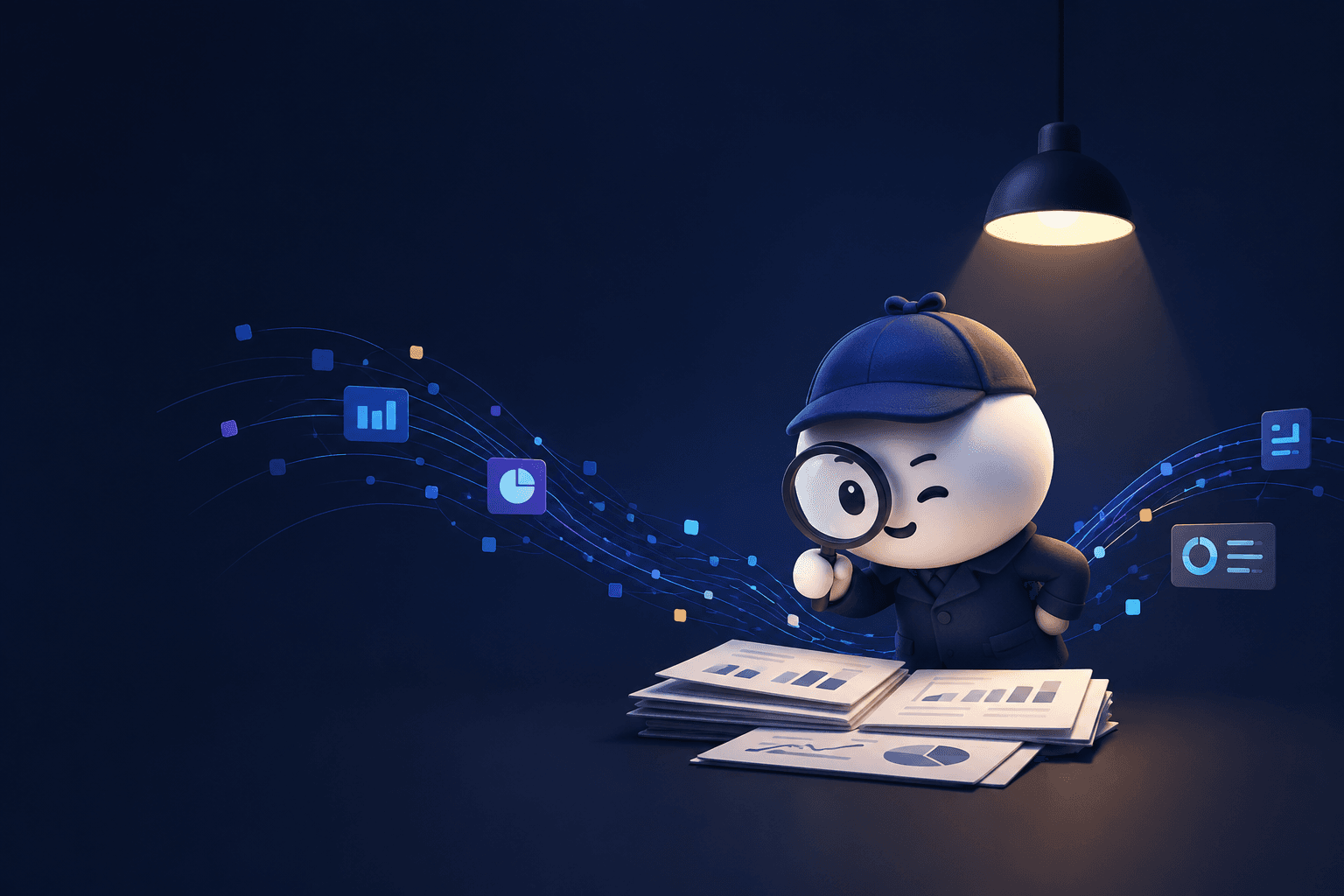
Somewhere, right now, a meeting is happening. No calendar invite. No Zoom link. No one in a blazer talking about "synergy".
It's happening inside your data. And it's deciding what you see next.
Every time you browse a website, linger on a product page, or skip a video after three seconds, you're casting a vote. Somewhere in a server room, that vote gets counted, cross-referenced, and acted on usually before you've even closed the tab. This is the invisible machinery behind every "recommended for you" section, every eerily accurate ad, every feed that seems to know you better than your best friend does.
For businesses, this isn't just a curiosity. It's one of the most powerful and most underused assets you have. Let's pull back the curtain on how it actually works, and why every brand, agency, and marketing team should care.
The Meeting You Never Get Invited To
Think about what happens when you browse an online store. You look at a few pairs of running shoes, hover over one for a bit longer than the rest, maybe add something to your cart and abandon it. To you, that's just Tuesday. To a content recommendation algorithm, that's a goldmine of behavioral data.
Every action gets logged: what you clicked, how long you stayed, what you scrolled past without a second glance, what you searched for right before. None of this is random. It's a signal. And signals get compiled, analyzed, and matched against millions of other users who behaved the same way.
That's the "meeting" a constant, automated negotiation happening between your behavior and a system trying to predict what you'll want next. It's not one decision. It's thousands of tiny ones, made every second, across every platform you touch.
Who's Actually in the Room
If this were a real meeting, here's the guest list:
User behavior data. Clicks, scrolls, dwell time, searches, purchases, even how fast you type. This is the raw material the notes everyone's taking.
Recommendation engines. The system that takes all those notes and turns them into predictions. Some use collaborative filtering (comparing you to people with similar habits). Others use content-based filtering (comparing the actual attributes of what you engaged with). Most modern platforms blend both.
Machine learning models. These are the ones running the math in the background, constantly updating their guesses as new data comes in. They don't "know" anything the way a person does they're pattern-matching at a scale no human brain could manage.
Feedback loops. This is the part people miss. Every time you engage with a recommendation, that engagement becomes new data, which shapes the next recommendation, which you engage with again. The meeting never ends. It just keeps refining its own agenda.
The result feels like magic. It isn't. It's structure a very deliberate, very fast structure, built entirely out of data most people never think twice about giving away.
A Scenario Worth Paying Attention To
Say someone visits a creative agency's website. They spend a few minutes on the portfolio page, click into two case studies, and leave without filling out a contact form.
Nothing happened, right? Wrong. That visit just became a data point. Within a day or two, that same person starts seeing the agency's work pop up again on Instagram, in a LinkedIn sponsored post, maybe even a Google display ad on a completely unrelated site.
That's retargeting, and it's built on the exact mechanism we just walked through. The visit generated a signal. The signal triggered a system. The system decided this person was a warm lead worth staying in front of automatically, without anyone on the agency's team lifting a finger.
Multiply that by every visitor, every campaign, every platform, and you start to see the scale of what's happening behind a single website visit. This is the "hidden meeting" in action and it's running for every brand with a digital presence, whether they're actively managing it or not.
Why This Matters More Than Most Businesses Realize
Here's the uncomfortable truth: most businesses are generating an enormous amount of this data every single day, and most of it goes completely unused.
Every website visit, every email open, every abandoned cart, every customer service chat it's all user behavior data, and it's all telling a story about what your audience actually wants, not what you assume they want. The businesses winning right now aren't necessarily the ones with the biggest budgets. They're the ones actually listening to that story and turning it into business intelligence they can act on.
This is where AI-powered marketing stops being a buzzword and starts being a genuine advantage. When you understand the mechanics behind personalized content, you stop guessing at what your audience wants and start practicing real data-driven decision making responding to what people are already telling you, through their behavior, not a survey.
Three shifts happen when a brand takes this seriously:
Content gets sharper. Instead of one-size-fits-all messaging, brands can build campaigns around what specific audience segments actually engage with because the data shows it, not because someone in a meeting had a hunch.
Ad spend gets smarter. Retargeting, lookalike audiences, and predictive analytics all run on this same behavioral foundation. Understanding it means spending less to reach the people most likely to convert, instead of blasting a budget at everyone.
Customer experience gets more human, not less. Counterintuitively, good personalization makes brands feel more attentive, not more robotic because the content people see actually matches what they've shown interest in.
The Mechanics, Broken Down Simply
If you strip away the jargon, the whole system runs on four steps, repeated endlessly:
1. Collect. Every click, scroll, search, and purchase gets captured. This is first-party data if it comes from your own site or app, or third-party data if it's pulled from platforms and partners.
2. Analyze. Machine learning models look for patterns not just in your behavior, but in how your behavior compares to everyone else's. This is where collaborative filtering and content-based filtering come in, working together to predict what's relevant.
3. Predict. Based on those patterns, the system generates a ranked list of what you're most likely to want to see next. This happens in milliseconds, every time you refresh a feed or load a page.
4. Serve. The predicted content gets shown to you an ad, a recommendation, a "you might also like" carousel. And the moment you interact with it, the whole cycle starts again with fresh data.
It's not one meeting. It's millions of them, running in parallel, all day, every day, for every user on every platform. That's what makes it feel invisible it's too fast and too constant for any one instance of it to stand out.
What This Means for Brands and Agencies
For a creative agency, this isn't just background theory it's the operating system behind modern marketing. Every campaign, every piece of content, every ad dollar spent is either working with this system or ignoring it.
The brands that treat their own data as an asset tracking what content earns real engagement, what drop-off points show up in a customer journey, what messaging actually moves people toward a decision are the ones turning raw numbers into real AI business insights. Every campaign gets a little sharper than the last, because it's built on real signals instead of assumptions, often powered by AI automation running quietly in the background.
The brands that ignore it are essentially showing up to a meeting they were never invited to lose. They're spending the same budget, creating the same content, and getting outperformed by competitors who are quietly letting their data do the talking.
This is also where good creative work and good data work start to overlap. The best-performing content isn't necessarily the most creative in a vacuum it's the most creative for the specific audience the data says is watching. Understanding the mechanics behind personalization doesn't replace great storytelling. It tells you exactly who to tell the story to, and how.
A Quick Word on Trust
None of this works long-term if it feels invasive. There's a real difference between personalization that feels helpful and personalization that feels like surveillance and audiences can tell the difference fast.
The brands that get this right are transparent about the data they collect, give people control over it, and use it to genuinely improve the experience rather than just extract more clicks. Good personalization should feel like a brand paying attention. Bad personalization feels like being followed. That line matters, and it's worth building every data strategy around respecting it.
The Takeaway
Every scroll, click, and pause is a message. Somewhere behind the screen, a system is reading that message, comparing it to millions of others, and deciding what to show you next all in the time it takes to load a page.
That's the meeting happening inside your data. It's constant, it's invisible, and it's already shaping how your audience experiences your brand, whether you're steering it or not.
The businesses that win from here aren't the ones with access to more data almost everyone has that now. They're the ones who understand the mechanics well enough to actually use it: sharper content, smarter targeting, and a customer experience that feels less like a guess and more like a conversation.
The meeting's already happening. The only real question is whether your brand has a seat at the table.